If you or someone in your household has allergies, choosing a new carpet can feel more complicated than it should. Carpet can collect everyday particles such as dust, pollen, pet dander and house dust mite allergen, so the most useful question is not whether a carpet is completely “hypoallergenic”, but how easy it will be to keep clean and dry in your home.
There is no carpet that can guarantee an allergen-free room. For many households, however, sensible carpet selection combined with regular cleaning, good ventilation and moisture control can make carpet easier to manage. If you have a diagnosed or severe allergy, particularly to house dust mites, follow the advice of your GP or allergy specialist when choosing flooring.
Quick answer: If you want carpet, favour a style that is straightforward to vacuum and maintain, keep it dry, and use an effective cleaning routine. Lower-pile carpets are often simpler to clean thoroughly than very deep-pile styles.
What causes carpet-related allergy concerns?
Carpet itself is not usually the substance someone is allergic to. The issue is that carpet can act as a reservoir for particles already present in the home, including dust, pollen, pet dander and house dust mite allergen. These can build up when cleaning is infrequent or when a room stays damp.
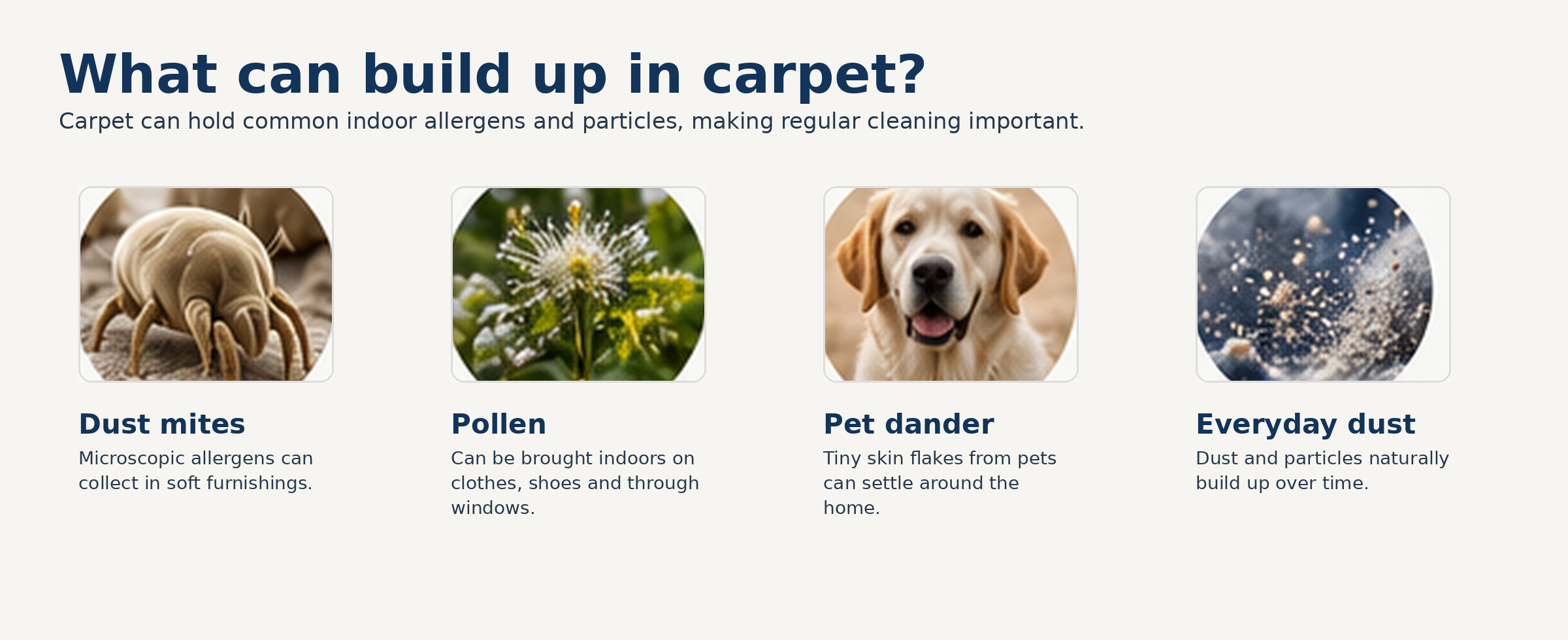
That makes maintenance especially important. Regular vacuuming, damp dusting of surrounding surfaces and good ventilation can all help reduce the build-up of indoor dust and allergens.
Is there such a thing as hypoallergenic carpet?
“Hypoallergenic carpet” is a useful search term, but it should not be treated as a medical guarantee. No carpet can stop allergens entering a room, and even a carpet marketed as allergy-friendly still needs to be cleaned and maintained properly.
When comparing options, focus on practical characteristics: how easily the carpet can be vacuumed, whether spills can be dealt with promptly, how suitable it is for the room, and whether the household can maintain it consistently.
Low pile or deep pile: which is easier to manage?
For an allergy-conscious household that wants carpet, a lower or tighter pile can be a practical choice because the surface is generally easier to vacuum thoroughly. Very deep or shaggy piles have more fibre depth for dust and debris to settle into and can require more effort to clean effectively.
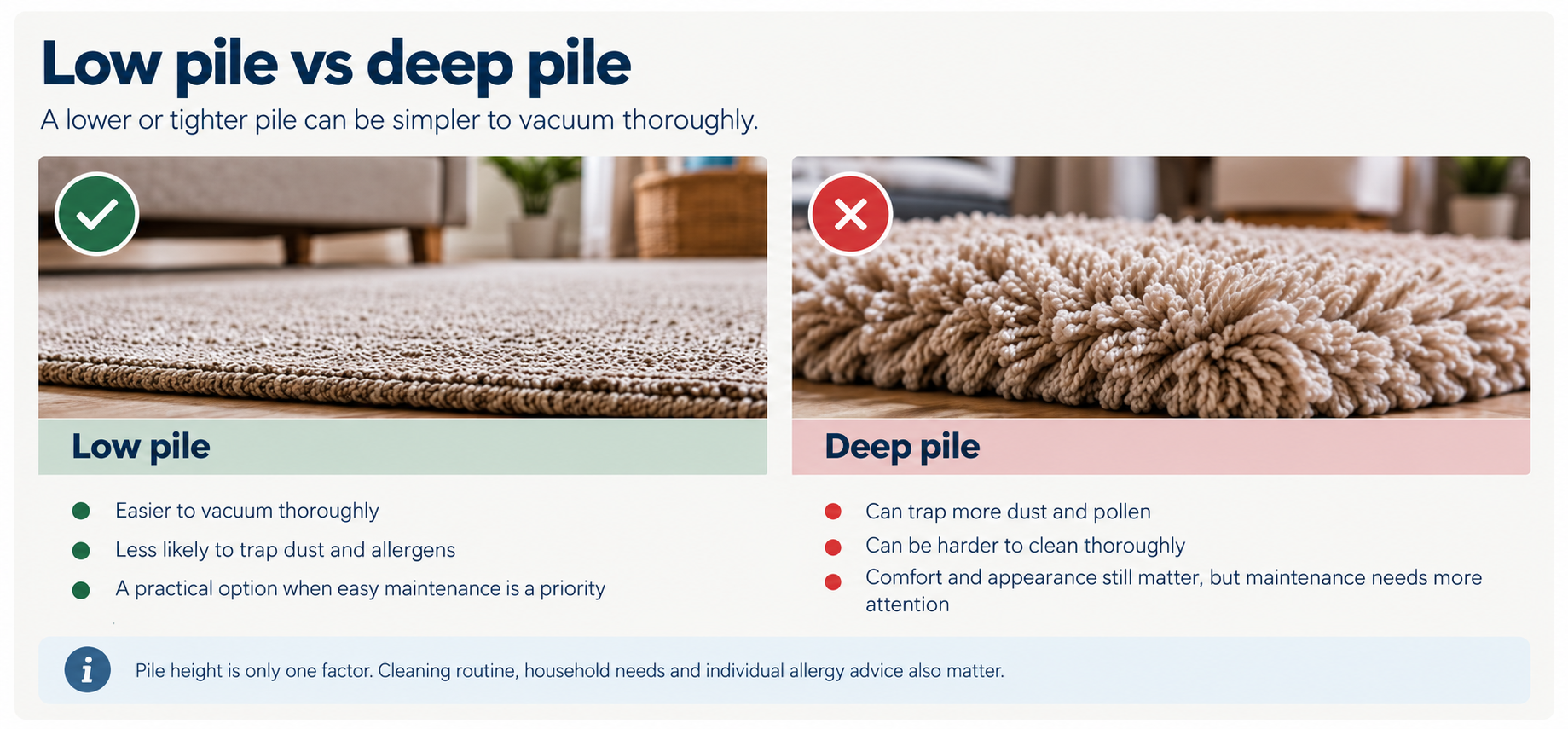
That does not mean every low-pile carpet is automatically suitable for every allergy sufferer. The condition of the carpet, the cleaning equipment used, humidity and the rest of the room all matter too. For more information about different carpet piles and their practical benefits, see our guide to buying carpet.
Which carpet fibre is best for allergy sufferers?
There is not enough basis to label one common carpet fibre as universally “best” for allergies. Wool, polypropylene, nylon and other fibres all have different performance, comfort, cleaning and price characteristics, but fibre alone does not make a room allergy-safe.
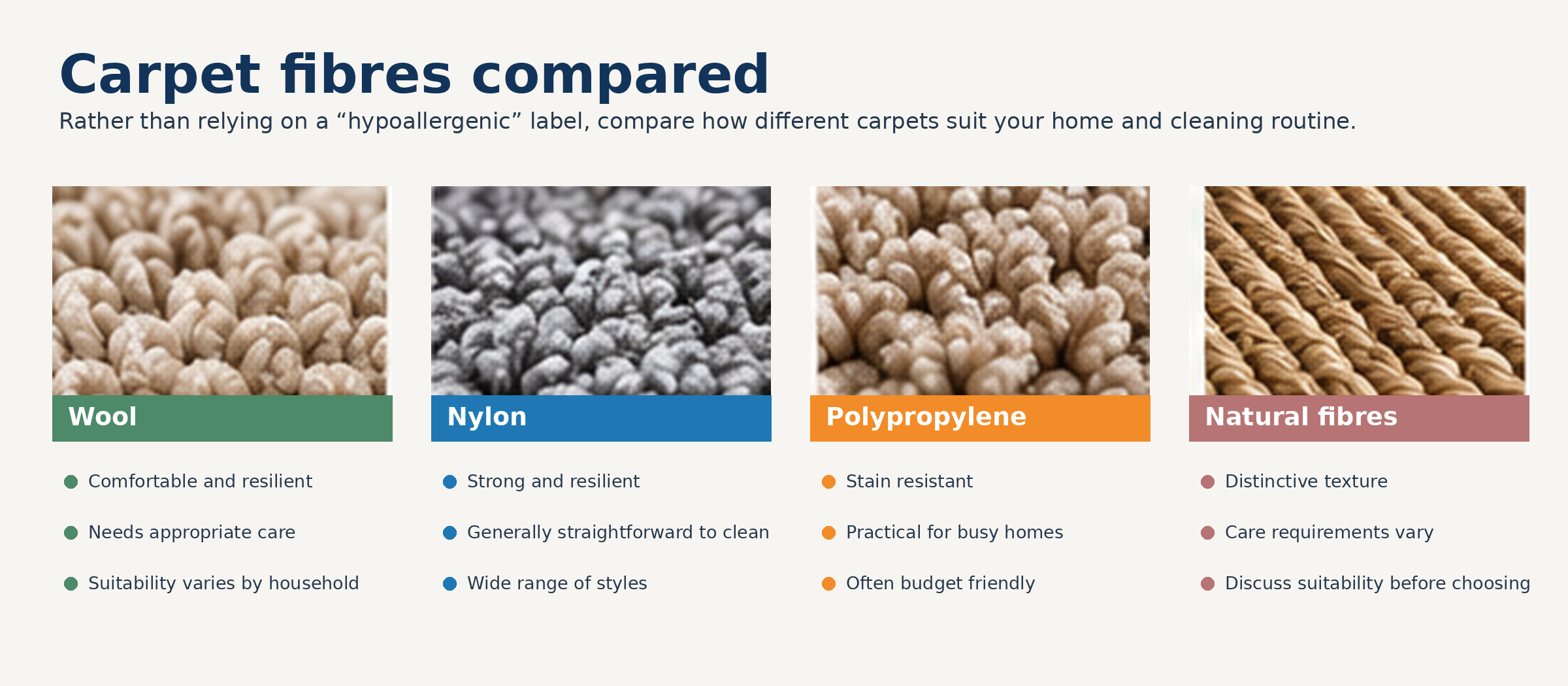
For Greg Stone Flooring customers, the more useful approach is to compare the carpets that suit the room and budget, then consider how straightforward each option will be to clean and maintain. Our team can talk you through the practical differences between the carpets available rather than relying on a blanket “hypoallergenic” label.
Does underlay matter?
Underlay is important for the overall feel and performance of a carpet, but it should not be presented as a treatment for allergies. The priority is a flooring system that is correctly fitted and kept dry. Persistent moisture beneath any floor covering can contribute to mould and indoor air quality problems.
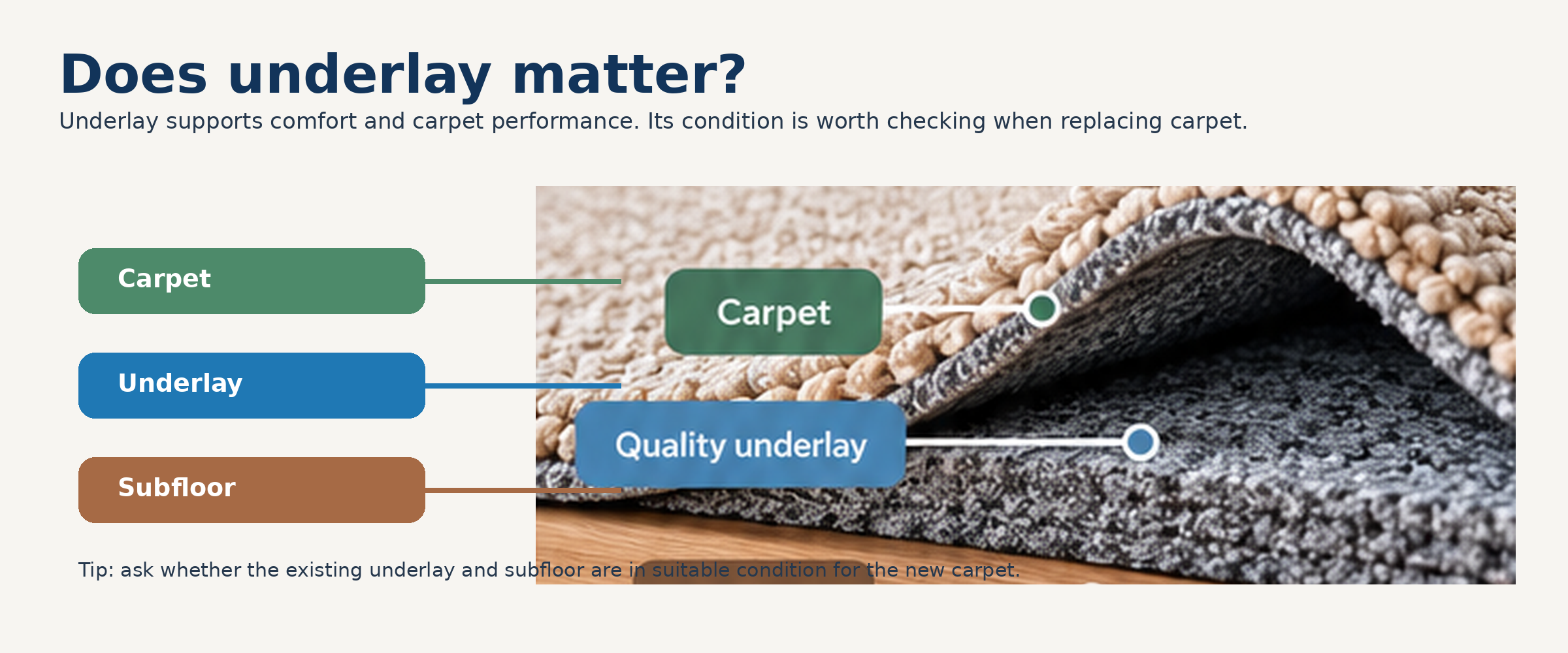
When replacing carpet, it is worth discussing the condition of the existing subfloor and underlay with your fitter so that any signs of damp or moisture can be addressed before the new carpet goes down. Underlay can also affect the comfort and warmth of your flooring, which we explore in our guide to energy-efficient flooring.
How to keep carpet more allergy-friendly?
- Vacuum regularly. Weekly vacuuming is a sensible baseline, and some homes will need it more often. A vacuum with effective filtration, such as a HEPA filter, can help contain fine particles rather than releasing some of them back into the room.
- Keep the home dry and well ventilated. Deal with spills quickly, use extractor fans where appropriate and address condensation or damp rather than allowing moisture to persist.
- Damp-dust nearby surfaces. This helps collect settled dust rather than simply moving it back into the air.
- Manage pet allergens across the whole room. Wash pet bedding, clean upholstered furniture and groom pets appropriately; carpet is only one place where pet allergens can settle.
- Think about who does the cleaning. Vacuuming can temporarily disturb dust. People with a diagnosed dust mite allergy or asthma may be advised to avoid the room while vacuuming is taking place.
What about carpet in bedrooms?
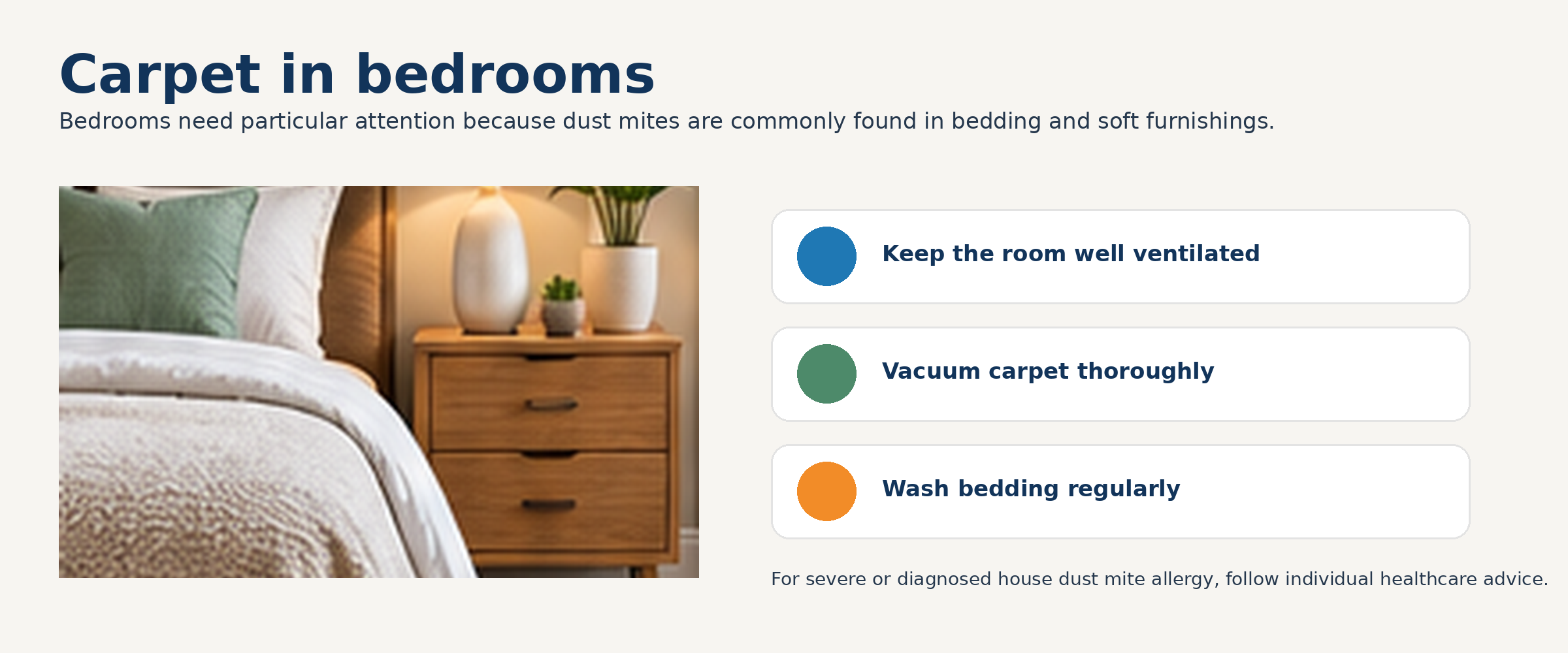
Bedrooms deserve extra thought because people spend many hours there and house dust mites are commonly found in bedding, mattresses, carpets and other soft furnishings. If you want carpet in a bedroom, choose a style you can clean thoroughly and keep the room well ventilated.
For people with a severe or diagnosed house dust mite allergy, health guidance may recommend removing fitted carpet from the bedroom and using an easier-to-clean floor surface instead. This is a medical consideration rather than a carpet preference, so follow individual advice from a healthcare professional.
How to choose the right carpet for your home?
The best carpet is one that balances comfort, appearance, budget and the realities of your household. If allergies are part of the decision, tell the flooring specialist at the start so the conversation can focus on carpets that are straightforward to maintain, as well as the right pile, colour and performance for the room.
Greg Stone Flooring has more than 40 years’ experience helping customers across Brighton, Hove and Sussex choose flooring for their homes. We offer a large choice of carpets and a personal service, so you can compare options in person and ask practical questions before deciding.
Need help choosing a carpet?
Visit Greg Stone Carpets & Flooring to compare carpet styles, colours and practical options with our team. We can help you narrow down the choices for your room, lifestyle and budget, and arrange fitting when you are ready.